
Planning a Japan holiday can become complicated when too many destinations, attractions, and transportation options compete for limited time. A route that looks concise on a map may involve several transfers, long walks, or substantial travel between regions.
For travelers comparing Japan Itinerary Sites, different resources can provide useful ideas for organizing destinations, estimating travel time, and arranging attractions into a manageable schedule. The most useful approach is to compare the route logic rather than simply copying one suggested itinerary.
Where Japan Trip Planning Gets Complicated
Japan offers an abundance of attractions, from dense urban districts to historic temples and scenic mountain areas. This variety is appealing, but it can create logistical complexity when too many locations are added to a short itinerary.
Too Many Places to Fit Into One Trip
First-time visitors often want to experience Tokyo, Kyoto, Osaka, Mount Fuji, Hiroshima, and other destinations in a single journey. The difficulty is not necessarily choosing interesting places but allocating enough time to experience them properly.
Every additional destination can introduce hotel changes, station transfers, check-ins, and transportation time. A crowded schedule may therefore leave little opportunity to explore beyond the headline attractions.
Routes That Look Easy But Take Longer
Distances on a map can be deceptive. Reaching an attraction may require several train connections, walking between stations, waiting for departures, or navigating unfamiliar platforms.
Instead of estimating only the distance between cities, consider the complete journey from the hotel to the attraction. This produces a more realistic estimate of how much sightseeing time remains.
Different Websites Suggest Different Plans
Travel websites may recommend completely different routes for the same number of days. One might prioritize famous landmarks, while another emphasizes food, neighborhoods, nature, or cultural experiences.
These differences often reflect varying travel styles rather than a single universally applicable route. Comparing the reasoning behind each plan can help identify ideas that fit the intended journey.
Choosing Sites for a Japan Itinerary
Online itinerary resources can be useful starting points for organizing a first visit. During First Trip Planning, however, suggested schedules should be evaluated according to geography, transportation time, trip duration, and the number of activities included each day.
Comparing Ready-Made Route Suggestions
Ready-made itineraries can reveal practical combinations of destinations. Comparing several examples may show which attractions are commonly grouped together and which locations require more dedicated travel time.
Rather than copying an entire schedule, examine how each source distributes activities throughout the trip. This makes it easier to identify useful patterns while avoiding an overly rigid timetable.
Checking Travel Time Between Destinations
Travel time should be treated as part of the itinerary rather than an invisible gap between attractions. Train transfers, walking, station navigation, queues, and unexpected delays can all consume valuable hours.
“An effective itinerary leaves enough room for transportation and unexpected changes instead of treating every minute as guaranteed sightseeing time,” says travel planning consultant Naomi Carter.
Adding reasonable buffers can make the schedule more resilient. If one attraction takes longer than expected, the rest of the day does not necessarily need to collapse.
Matching Itineraries With Trip Length
A three-day Japan visit requires a different structure from a two-week journey. Short trips generally work better when concentrated around fewer areas, while longer stays can accommodate additional cities and regional excursions.
Hotel changes should also be considered. Moving between accommodations too frequently can consume time through packing, checkout, transportation, and check-in procedures.
Building A More Practical First Trip
A practical first visit does not have to include every famous attraction. A carefully paced itinerary can provide a richer experience by allowing enough time to explore selected places without constant schedule pressure.
Keeping Daily Stops Within Reach
Grouping destinations according to geographic proximity can simplify daily travel. Several attractions located within the same district may be easier to combine than landmarks scattered across an entire city.
This approach also provides flexibility. If one stop takes longer than anticipated, nearby alternatives can often be rearranged without disrupting the entire itinerary.
Leaving Space Between Major Visits
A schedule filled from early morning until late evening may appear efficient, but it can quickly become tiring. Leaving gaps creates room for meals, rest, spontaneous discoveries, and transportation delays.
Buffer periods are particularly valuable during a first Japan visit because unfamiliar stations and neighborhoods may require more navigation time than expected.
Adjusting Routes Around Personal Interests
The most relevant attractions depend on individual interests. Travelers fascinated by architecture may devote more time to historic districts and temples, while food enthusiasts may prioritize markets, local restaurants, and culinary neighborhoods.
Personal interests can also determine which experiences require advance reservations. Keeping less important activities flexible makes the itinerary easier to adapt when circumstances change.
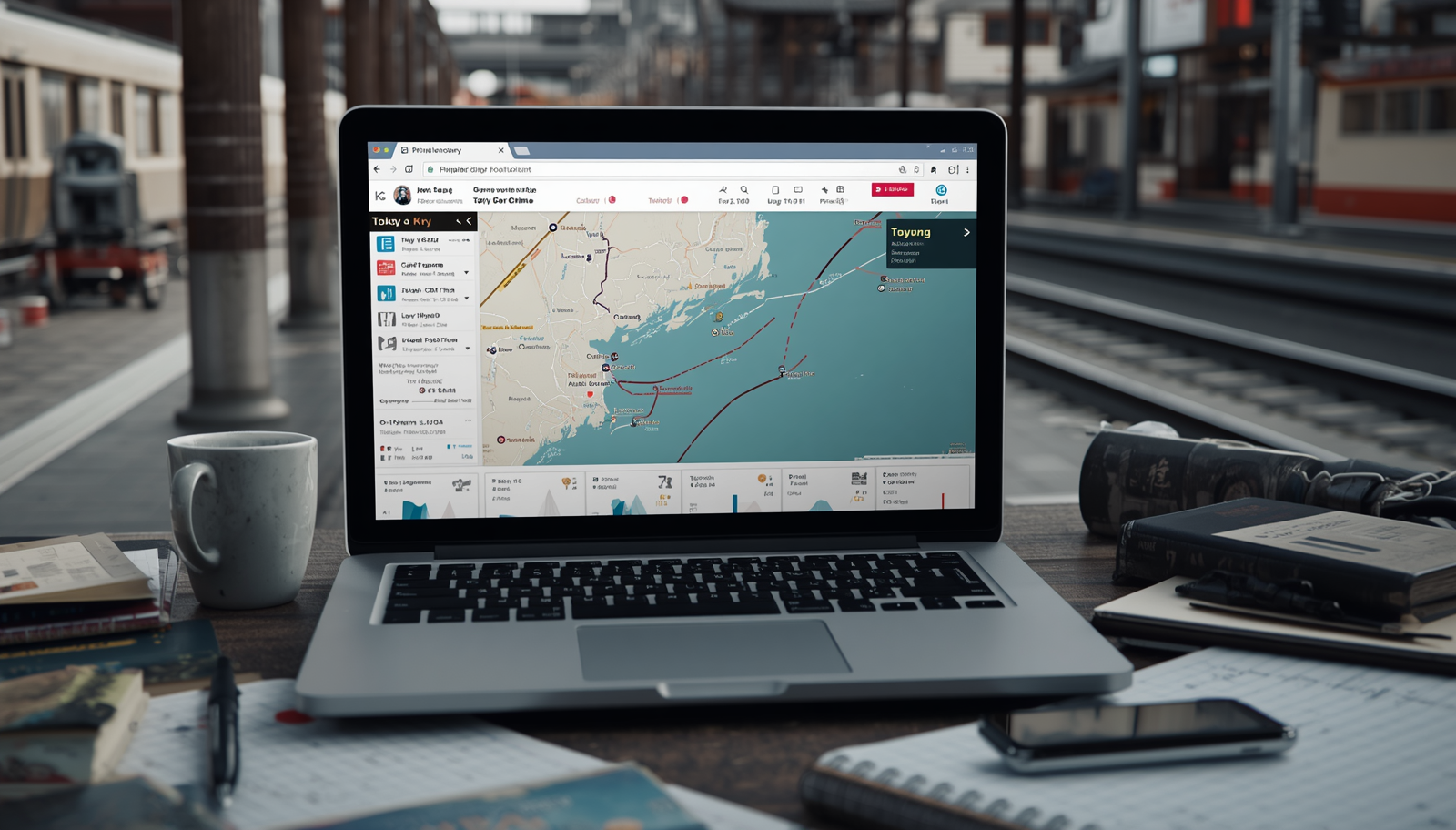
Build Your Japan Trip Itinerary
Choosing useful itinerary resources is only the beginning. A practical Japan route should balance destination variety with realistic transportation times, accommodation changes, and sufficient breathing room.
Comparing several itinerary suggestions can reveal different ways to structure the same trip. From there, destinations can be grouped by location, daily activities can be moderated, and the schedule can be adjusted around personal interests. The result is an itinerary that feels organized without becoming excessively rigid.