
A flight can look like a bargain until the baggage rules change the final number. When you compare international fares, the headline price is only the beginning. Checked luggage, cabin restrictions, fare conditions, and additional charges can quietly reshape the cost of a trip.
That is why Flight Prices Booking should involve more than comparing the first prices displayed on a search page. Before choosing a ticket, look beyond the advertised fare and understand what you are actually paying for. Could a slightly higher fare become cheaper once your baggage needs are included?
Why I Checked Baggage Policies First
Baggage policies can influence the real cost of a flight more than many travelers expect. Different airlines, and even different fare types from the same airline, can provide different allowances. Checking these details early makes the comparison clearer and prevents an attractive fare from becoming an expensive surprise later.
Using reliable Fare Checking Methods also means examining the baggage conditions attached to each ticket. Compare the included allowance, permitted dimensions, weight limits, and potential additional fees before deciding which fare deserves a closer look.
Baggage Limits on Low-Cost Flights
Low-cost airlines often separate the basic ticket from optional services. A promotional fare may include the seat but provide limited cabin baggage or no checked luggage.
Before booking, check the airline’s current baggage allowance, including the number of permitted bags and their maximum weight. For connecting journeys, check the rules for every relevant carrier because baggage conditions may differ between flight segments.
Extra Fees for Checked Bags
Checked baggage can significantly affect the final fare. Some airlines charge different amounts depending on when the bag is purchased, while others vary fees according to route, fare type, or the number of bags.
Instead of looking only at the advertised ticket, calculate the price after adding the luggage you genuinely need. This gives you a more realistic picture of the trip’s transportation cost.
Carry-On Rules Before Booking
Carry-on baggage deserves the same attention. Airlines can impose specific limits for cabin bags and personal items, including maximum dimensions and weight.
The International Air Transport Association notes that carry-on requirements vary among airlines. Therefore, checking the operating carrier’s current rules is safer than relying on a general baggage standard.
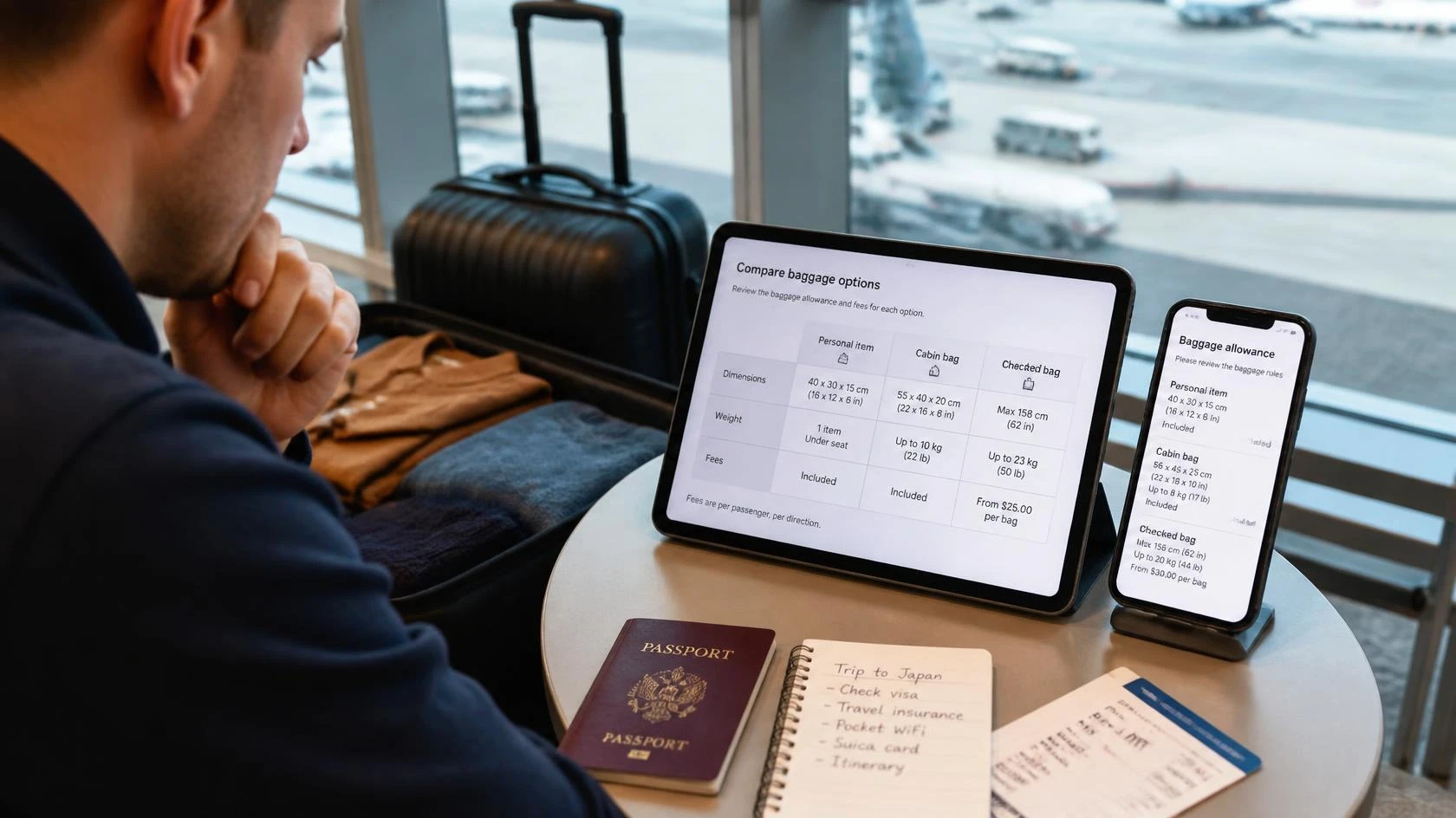
How I Compared Flights With Baggage Costs
Once the baggage rules were clear, the next step was to compare flights using their realistic total cost. Looking at the complete fare makes it easier to distinguish between an appealing headline price and a genuinely suitable travel option.
For effective Fare Checking Methods, compare the base ticket, included baggage, additional luggage charges, taxes, and unavoidable extras together. This creates a clearer comparison between competing flights.
Checking Included Baggage Allowance
Start by identifying exactly what comes with the selected fare. Look for terms such as free baggage allowance, checked baggage allowance, cabin baggage, and personal item.
Pay particular attention to connecting flights. Different airlines may apply different baggage policies, so the allowance shown for one segment should not automatically be assumed to apply to the entire itinerary.
Comparing Total Fare Costs
A useful way to compare flights is to calculate the effective cost rather than relying on the initial fare.
Base fare + required baggage + unavoidable fees = realistic flight cost.
This simple comparison can reveal why a seemingly cheaper ticket is not always the lowest-cost option for a traveler carrying checked luggage.
Reviewing Airline Baggage Terms
Before paying, review the airline’s official baggage conditions. Look for weight limits, dimensions, excess baggage charges, purchasing deadlines, and airport payment conditions.
Nick Careen, IATA’s Senior Vice President for Operations, Safety and Security, explained the importance of better baggage information by stating, “Accurate and timely information is key to improving baggage operations.” This highlights why travelers should verify current baggage conditions rather than rely on assumptions.
What Changed After Comparing Baggage Fees
After baggage expenses were included, the flight comparison became much more straightforward. Instead of focusing on the lowest number shown in a search result, the comparison reflected what each ticket would actually cost based on the trip’s requirements.
This is where Fare Checking Methods become especially practical. By comparing complete costs rather than isolated ticket prices, travelers can identify unnecessary charges and understand which fare fits their circumstances.
Finding More Accurate Flight Prices
Adding baggage costs creates a more accurate estimate of the total journey. This is particularly important for longer trips, family travel, or anyone who needs multiple checked bags.
The result is a more meaningful comparison because every flight is evaluated against similar requirements rather than different assumptions.
Avoiding Unexpected Baggage Charges
Unexpected baggage charges often occur when travelers assume luggage is included without checking the fare conditions. Weight and size restrictions can also create additional expenses when bags exceed permitted limits.
Reading the baggage policy before payment gives travelers an opportunity to adjust their luggage, select another fare, or reconsider the itinerary before the cost becomes unavoidable.
Choosing Flights Within My Budget
A realistic travel budget should account for expenses genuinely required for the journey. For some travelers, that means adding one checked bag; for others, a cabin bag may be sufficient.
The important question is simple: does the complete fare fit your budget? Once baggage is included in the calculation, that question becomes much easier to answer.
Compare Flight Costs Before Booking
The right flight comparison starts with the complete cost, not the most attractive number on the search page. Check what baggage is included, confirm the restrictions, and consider every luggage charge before you book.
Willie Walsh, Director General of IATA, has emphasized the importance of passenger-focused improvements, noting, “The passenger experience is at the heart of everything we do.” For travelers, understanding exactly what a fare includes is one practical way to make the booking experience clearer.
Ready to book your next trip? Check the baggage policy, compare the complete fare, and choose the flight that matches your actual travel needs.