
Indoor skiing gives you a rare chance to work on technique without waiting for winter or travelling to the mountains. In Manchester, facilities such as Chill Factore provide a controlled snow environment where skiers can practise turning, stopping, speed management, and linked turns across structured progression levels.
For anyone working on Indoor Ski Turns, the useful secret is to treat each turn as a sequence rather than one dramatic movement,establish balance, manage speed, guide the skis, and finish the direction change with control. A surprisingly small adjustment in body position can make an indoor turn feel smoother, quieter, and far more deliberate.
Struggling With Ski Turns Indoors
Indoor slopes can expose weaknesses that are easy to overlook outdoors. The consistent surface and confined environment make it easier to repeat the same movement, but they also demand awareness of available space, balance, and changing slope angles.
Finding Enough Space For Each Turn
Crowded indoor slopes can make a wide turn difficult, particularly when several skiers are sharing the same section. Choose a clear line, look ahead, and shape your turn according to the available terrain rather than forcing a large arc. Controlled linked turns are already part of structured progression at Chill Factore, where learners develop speed and direction control through turning practice.
Keeping Balance During Direction Changes
Balance becomes especially important when the skis change direction because leaning abruptly can disturb your centre of mass. Keep your stance stable, allow your knees and ankles to flex naturally, and avoid throwing your shoulders into the turn. A quieter upper body can help the skis perform the directional work instead of making every change feel abrupt.
Adjusting To The Indoor Slope
An indoor slope does not necessarily feel identical throughout its length. Changes in gradient, snow texture, traffic, and available space can influence how quickly the skis accelerate and how much room a turn requires. Treat each section as feedback, then adjust your line and speed before the next direction change.
Practicing Better Turning Techniques
Good turns become easier when the movement is broken into manageable components. This is where Beginner Turning Techniques become useful, because the objective is not simply turning left and right but learning how speed, edging, steering, and posture cooperate.
Setting A Comfortable Turning Rhythm
A consistent rhythm prevents each turn from becoming an isolated reaction. Try to make the beginning, middle, and completion of each turn feel connected rather than rushing directly into the next direction change. Chill Factore’s progression specifically develops controlled turning and eventually linked turns, reinforcing the value of repetition and consistency.
Controlling Speed Before Each Turn
Speed should be managed before it becomes a problem. Begin shaping the turn early, use the available slope width intelligently, and avoid waiting until the skis feel too fast before responding. This approach gives you more time to steer and makes the resulting movement less frantic.
Using Body Position For Direction Changes
Keep your body centred over the skis while allowing the lower body to guide the change of direction. Excessive rotation from the shoulders can make the movement feel unstable, particularly when transitioning quickly from one edge to another. Ski instructor and coach Ron LeMaster’s widely used technical work emphasizes understanding ski movements through the interaction of balance, edging, pressure, and steering rather than relying on a single isolated action.
Building Confidence On The Slope
Confidence develops from predictable movement, not from simply skiing faster. Once the basic turn pattern becomes familiar, gradually changing the speed, radius, and terrain challenge can make the technique more adaptable.
Making Turns Feel More Consistent
Repeat a manageable turn shape until the movement becomes familiar. Focus on finishing one turn under control before initiating the next, rather than chasing speed or making unnecessarily sharp changes. Structured indoor progression similarly moves learners from basic snowplough turns toward controlled turning and linked parallel skiing.
Handling Faster Changes With Control
When direction changes become faster, precision matters more than force. Keep your movements compact, maintain pressure through the skis, and anticipate the next turn instead of reacting after the skis have already accelerated. Once the rhythm becomes automatic, faster turns can begin to feel less like a scramble and more like a continuous conversation between your skis and the slope.
Preparing For Outdoor Ski Conditions
Indoor practice can build useful movement patterns, but outdoor skiing introduces variables that a controlled slope cannot completely reproduce. Natural snow, changing visibility, wider terrain, weather, steeper sections, and unfamiliar gradients require additional adaptation. Use indoor sessions to strengthen fundamental turning and speed-control skills, then transfer those skills progressively when outdoor conditions allow.
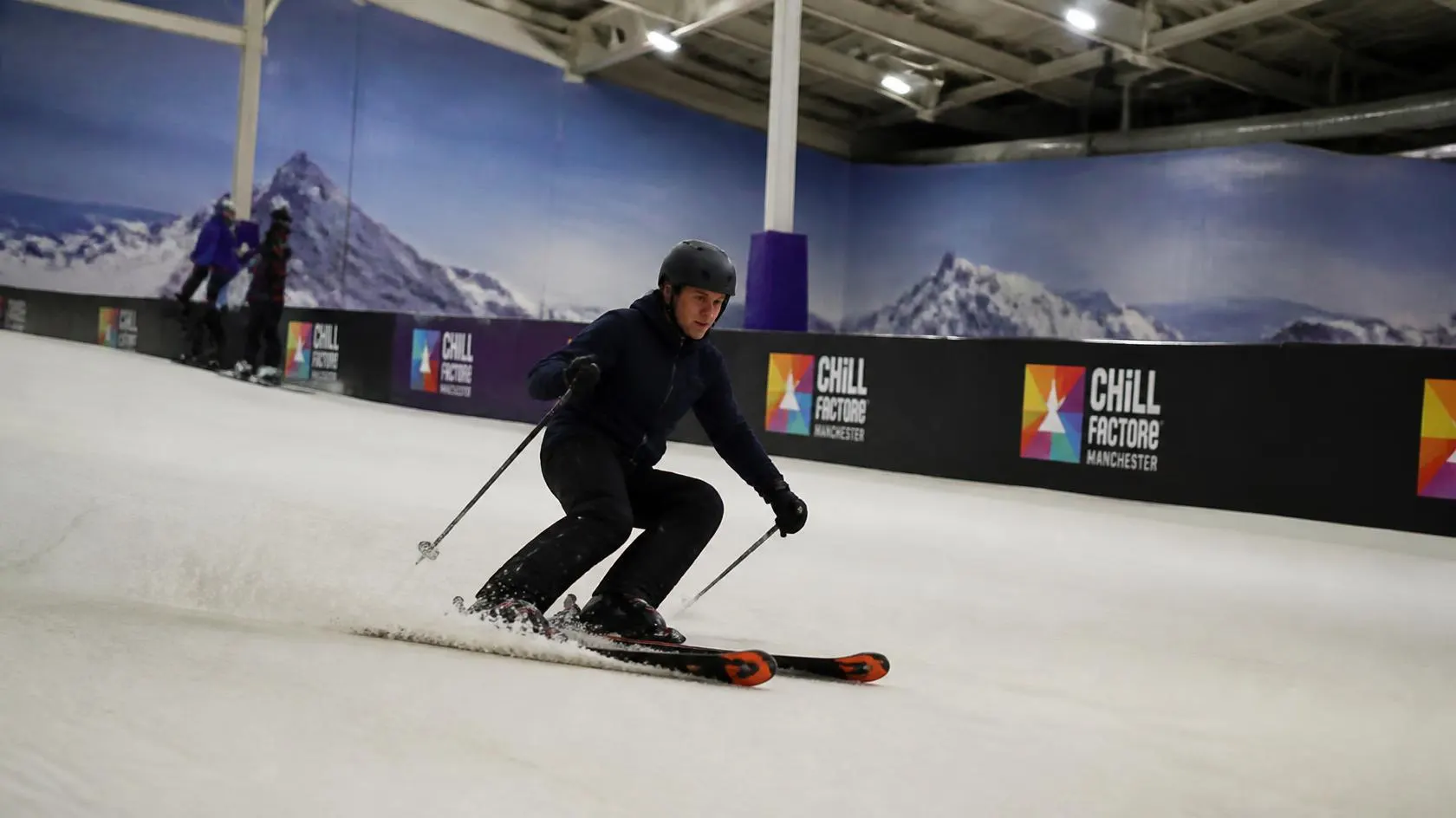
Improve Your Indoor Ski Turns
The most productive indoor session is not necessarily the one with the fastest runs. It is the session where each turn gives you useful feedback about balance, speed, steering, and body position, allowing small corrections to accumulate into more reliable technique. A practical approach is to begin with comfortable turns, gradually link them together, and only increase speed or complexity once control remains consistent. As skiing coach Warren Smith has emphasized through his instructional approach, effective skiing depends on building movement skills progressively rather than simply pushing into harder terrain before the fundamentals are reliable. So, keep the movements deliberate, watch the space around you, and let repetition sharpen your technique. If you are heading to an indoor slope in Manchester, use each run as a focused opportunity to refine your Indoor Ski Turns rather than simply counting how many runs you complete.